The Iran war's redrawing of the global trade map is forcing Gulf nations to retool their investment play book, ploughing capital into infrastructure, from energy pipelines to ports, to weather the fallout from the conflict.
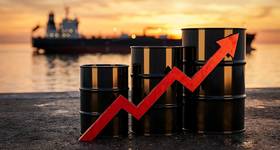
The war has highlighted the Gulf's overreliance on the Strait of Hormuz, previously a chokepoint for 20% of global oil flows but also subject for decades to Iranian threats of disruption.
With the strait virtually blocked for much of the past six months, a burst of billions of dollars of investment commitments has emerged as Gulf energy exporters try to future-proof their economies now facing a severe slowdown.
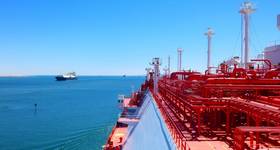
Trade is being redirected to Saudi ports on the Red Sea and the United Arab Emirates' eastern ports but capacity is smaller. Gulf governments are looking at ways to create permanent, integrated solutions to get round using the Strait of Hormuz, said an industry source, declining to be named due to the sensitivity of the matter.
'Ports, Ports, Ports'
While most Gulf governments can tap into oil riches accumulated over decades, some may look to external funds as they work towards ambitious foreign direct investment targets and as big infrastructure funds and other international investors show interest in the region's assets.
Costs could exceed hundreds of billions of dollars in the coming years and Gulf sovereign wealth funds, among the biggest in the world, are already stepping in to accelerate the push.
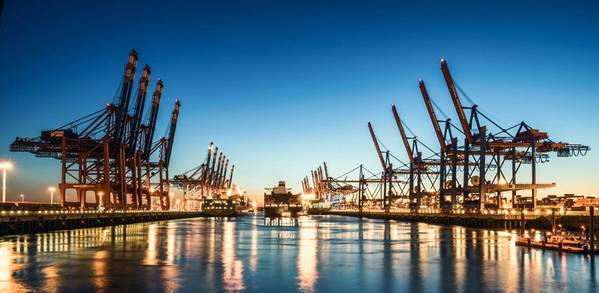
Ports have emerged as a "mission-critical priority" for Gulf governments, including Saudi Arabia, said a second industry source.
"If two years ago sports was the big buzz thing, I think for the time being, next year or two, they're going to say ports, ports, ports," he said of Saudi Arabia.
Abu Dhabi sovereign wealth fund L'IMAD said last week it plans to buy out the rest of AD Ports ADPORTS.AD as it revamps the company's strategy.
AD Ports operates ports in the United Arab Emirates and across the globe, but its UAE container throughput, as well as bulk and general cargo volumes, dropped by around two thirds in the second quarter from a year earlier as the company said it operated "through perhaps the most significant challenge in its 20-year history."
Dubai's DP World, one of the world’s biggest port operators, also saw business decline in the first half. It plans to develop two container terminals in Fujairah, where the UAE is building a new oil pipeline that will double crude capacity to Fujairah when it becomes operational next year. DP World is also working on inland container depots in the UAE.
Zin Bekkali, chief executive of UK-based investment management firm Silk Invest, says Gulf governments have the capital to fund some or most of this accelerated investment in infrastructure internally.
"So infrastructure is definitely an area which we think is going to benefit," Bekkali said.
Saudi Arabia has fast-tracked billion-dollar plans to steer oil away from Hormuz, including a capacity expansion of its crude pipeline to the western Red Sea coast, sources told Reuters last month, potentially helping neighbours transport more oil without crossing the strait.
Economic Fallout
Beyond disruptions to shipping, strikes on production facilities in the Gulf have significantly affected oil refineries, aluminium plants and data centres among others, while air traffic remains below pre-war levels, impacting tourism and business flowing through the region.
On another level, the war has shaken Gulf hubs' reputation as safe havens.
Qatar and Kuwait's economies are set to shrink by just over 8% this year, according to a Reuters poll, while Saudi Arabia's economy will expand by 1.4%, after 4.5% growth in 2025.
Qatar, one of the world's top liquefied natural gas exporters before the Iran war, relies wholly on the strait to export LNG and also faces massive production shortages due to damage to its energy facilities.
Kuwait Petroleum Corp is in discussions with Saudi Arabia and the UAE to expand their pipeline systems to accommodate its oil shipments. Iraq is working to expand its oil exports through Turkey's Ceyhan port and aims to begin exporting oil through ports at Syria's Baniyas and Jordan's Aqaba, involving new pipelines.
There has been some opening up of the Strait of Hormuz recently but trade is limited and there is no clear end in sight to the conflict between Iran and the U.S. despite a cooling of hostilities. Control of Hormuz is one of the most contentious points of disagreement, and countries are joining forces to find new ways to reduce reliance on it.
Turkey and Saudi Arabia aim to build a railway to link the two countries with Jordan and Syria in the next three or four years, Turkey's transport minister said in June, adding other Gulf countries would join the project.
"The recent Strait of Hormuz crisis has given us a very important lesson that these vulnerabilities are real... and they can happen anytime at any chokepoint," said Afaq Hussain, a former senior fellow at the Middle East Initiative at the Atlantic Council.
Backup trade and transport routes are needed even when they may initially appear uneconomical, he said.
(Reuters - Reporting by Federico Maccioni, Sarah El Safty and Siddarth S; Editing by Susan Fenton)

 Subscribe