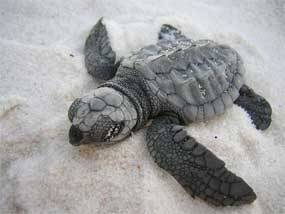
A committee of senior officials in President Donald Trump's administration voted on Tuesday to exempt the Gulf of Mexico oil and gas industry from a federal law meant to protect endangered species including whales, birds and sea turtles.
The decision, the first of its kind in more than three decades, is the latest government effort to unwind environmental regulations that Trump says hold back domestic energy production.
The meeting of the Endangered Species Committee, nicknamed the "God Squad" because of its power to grant exemptions to the Nixon-era Endangered Species Act, was attended by Defense Secretary Pete Hegseth, who requested the exemption because litigation was threatening Gulf oil and gas production.
"We cannot allow our own rules to weaken our standing and strengthen those who wish to harm us," Hegseth said during the livestreamed meeting. "So for these reasons, exemption from the Endangered Species Act in the Gulf is not just a good idea, it is a critical matter of national security."
The panel's six senior members, who include the heads of the Interior Department, Agriculture Department, Environmental Protection Agency and others, voted unanimously in favor.
Interior Secretary Doug Burgum, the committee's chairman, invoked the global oil disruption from the war in Iran as a reason for secure supplies of domestic energy, including for military operations and readiness.
"Current events have shown the impact of what can happen when major energy sources are taken offline," he said.
The Gulf of Mexico, which Trump renamed the Gulf of America under an executive order, is home to about 15% of U.S. crude oil production.
The meeting marked the fourth time the Endangered Species Committee has gathered since its creation in 1978, and the third time it has approved an exemption.
The panel granted its first exemption in 1979 to a Wyoming dam project that a federal court had blocked due to threats to whooping crane habitat, and in 1992 to allow timber sales in Oregon that the U.S. Fish and Wildlife Service had determined would harm the northern spotted owl.
The owl exemption was later overturned by a court.
Tuesday's vote was also the first time the panel has approved an exemption on the basis of national security.
The committee's members said they were obligated to grant the exemption because the ESA allows for them when the defense secretary determines they are required for national security reasons.
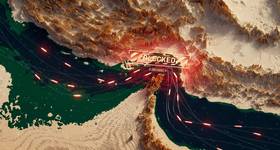
The U.S. and Israeli war on Iran has cut off around a fifth of the world's oil and liquefied natural gas supply for about a month, triggering a big increase in energy prices at a time Trump is seeking to tamp down inflation.
ENDANGERED WHALES
The endangered Rice's whale has been at the center of litigation over oil and gas exploration in the Gulf in recent years. It is one of the rarest whale species in the world with fewer than 100 remaining, according to the National Oceanic and Atmospheric Administration.
A federal environmental analysis last year found that vessel strikes related to oil and gas drilling pose a threat to the whale's existence. Environmental group Sierra Club has also argued in federal court that the species is vulnerable to oil spills and climate change, among other issues.
Attorneys for the environmental group Center for Biological Diversity immediately challenged the decision, according to court papers filed in federal court in Washington.
"The Court should also vacate as arbitrary and capricious and without any foundation the Secretary of Defense’s determination that the Nation’s security somehow compels the unlawful waiver of the ESA rubber-stamped by the Committee," the group said in its complaint.
An oil and gas industry group said Gulf activities remained subject to environmental protections under a range of other federal laws, including the Marine Mammal Protection Act and National Environmental Policy Act.
"Today's decision reflects that these robust protections are in place, and that serial litigation from activist groups targeting a lawful, well-regulated industry should not be allowed to indefinitely obstruct projects of clear national importance," Erik Milito, president of the National Ocean Industries Association, said in an emailed statement.
(Reuters - Reporting by Nichola Groom; Editing by Bill Berkrot, David Gaffen, Mark Porter and David Gregorio)

 Subscribe