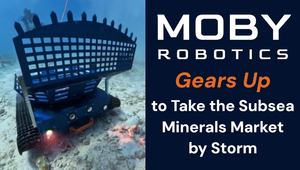
Moby Robotics is a new entrant to the subsea swarm autonomous robotic space, created in 2025 and aiming to take a leadership role in the discovery and recovery of subsea minerals market.
The race to secure critical minerals from the deep ocean has accelerated dramatically over the past two years, driven by geopolitical concerns, energy transition goals and growing demand for rare earth elements. While much of the industry's attention has centered on regulatory debates and large mining contractors, a new generation of robotics companies is quietly rethinking how subsea minerals can be discovered and recovered.
Among them is Miami-based MOBY Robotics, a start-up founded in 2025 that believes the future of deep-sea mining won't rely on ever-larger remotely operated vehicles and massive riser systems. Instead, the company is betting on fleets of autonomous, AI-enabled robots working cooperatively on the seafloor.
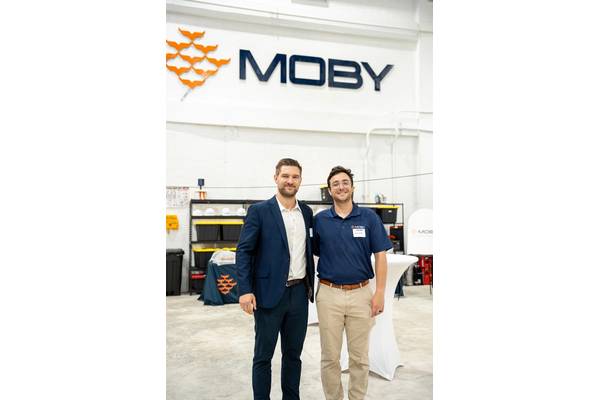
"We've actually taken the paradigm and turned it on its head," said Andrew Lipman, Chief Operating Officer of MOBY Robotics. "The robots themselves are teaching themselves how to optimize the mining process." Andy Lipman, COO, with MOBY Robotics co-founders Alexander Petersen, CEO, and Nate Clemett, CTO, said: "The robots themselves will figure out the optimization of collection while minimizing the environmental impacts “
Image courtesy MOBY Robotics
From Classification to Startup
Lipman brings decades of offshore and maritime experience to the young company. A graduate of the U.S. Merchant Marine Academy, he served as a U.S. Marine Corps infantry officer before spending the past 17 years with the American Bureau of Shipping, most recently as Director of Subsea and Mining Operations based in Shenzhen, China. After retiring from ABS, he joined MOBY to help bridge the gap between innovative engineering and real-world offshore operations.
That operational perspective is precisely what attracted him to the company.
"When I first started communicating with them, I thought it was simply a design house," Lipman said. "But it's soup to nuts."
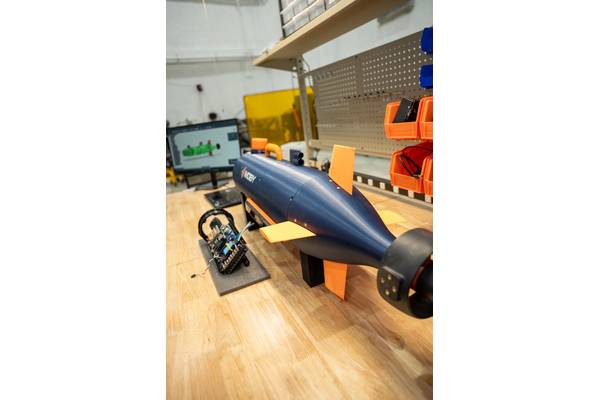
Rather than outsourcing development, MOBY designs and builds nearly every component of its robotic systems in-house. The Miami facility includes CNC machining, additive manufacturing and vehicle assembly, allowing the company to rapidly iterate designs and maintain control over its technology stack. Image courtesy MOBY Robotics
Swarms Instead of Giants
Conventional deep-sea mining concepts generally revolve around large collection vehicles feeding minerals through massive vertical riser systems to production vessels on the surface. MOBY is pursuing a very different architecture.
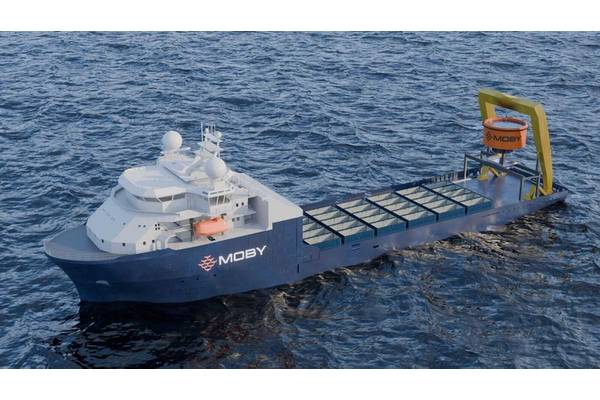
Its vision begins with autonomous swarms operating across the seabed to identify, collect and retrieve polymetallic nodules, rare earth minerals and seafloor massive sulfides. Material is then transported vertically using what the company describes as a skip-lift system to autonomous surface buoys before being transferred for delivery ashore.
Perhaps more significant than the hardware is the software driving it.
Instead of programming every movement, MOBY's vehicles use artificial intelligence and collaborative autonomy to optimize collection strategies while minimizing environmental disturbance. The robots continually refine how they work together, rather than simply executing pre-defined missions.
"The robots themselves will figure out the optimization of collection while minimizing the environmental impacts," Lipman said.
Mining First … but There’s More
Although responsible critical mineral recovery is MOBY's initial commercial focus, the underlying robotic architecture was designed with broader applications in mind.
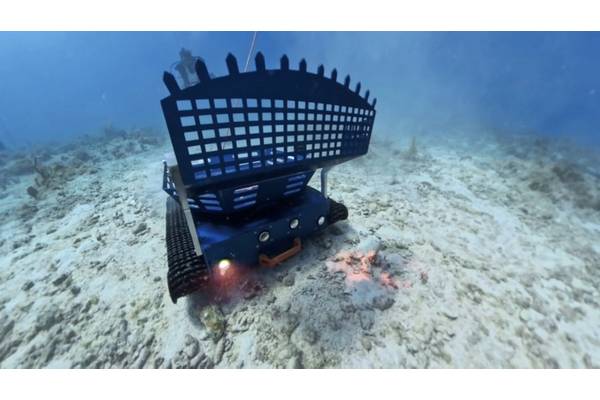
The company's modular platforms include the NEMO autonomous underwater vehicle for mapping, survey and persistent underwater monitoring, and the SCOOBEE autonomous seafloor crawler, which can be configured for tasks ranging from inspection to mineral collection with integrated marine life detection and avoidance systems.
Those same autonomous platforms could ultimately support offshore energy infrastructure inspection, subsea cable monitoring, maritime defense, oceanographic research and other deepwater missions by changing payloads rather than redesigning vehicles.
Like many startups, MOBY faces the challenge of proving new technology in a conservative offshore market. The company plans to initially offer complete turnkey systems, from seabed collection through surface handling, to mining companies before eventually pursuing operations in its own leased mineral concessions.
Lipman believes the company's greatest advantage lies in economics.
"This system has the absolute lowest requirements in terms of CapEx and OPEX," he said. "We're cutting the entry hurdle so low that now we can actually do this economically, sustainably and in an environmentally sound way."
Whether deep-sea mining develops as quickly as its proponents anticipate remains an open question. Regulatory frameworks continue to evolve, environmental scrutiny remains intense and commercial-scale operations have yet to be proven.
But if the sector does move from concept to commercialization, companies like MOBY Robotics suggest the winning technology may not be the biggest machine on the seabed. Instead, it could be fleets of smaller, smarter autonomous robots working together to solve one of offshore engineering's most ambitious challenges.
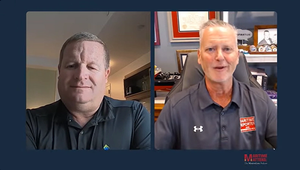
For more, watch the interview with MOBY Robotics COO Andrew Lipman on Offshore Engineer TV:

 Subscribe