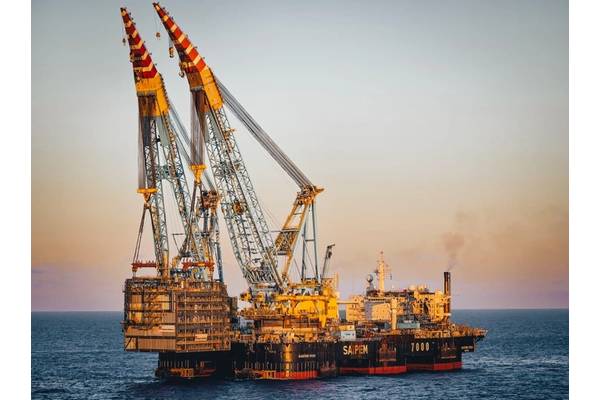
Saipem has completed the lifting and installation of a gas recovery module for the Bouri Gas Utilization Project (BGUP) offshore Libya using its heavy-lift vessel Saipem 7000.
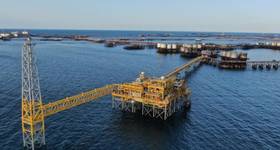
The module, fabricated by Rosetti Marino at its Marina di Ravenna yard on behalf of Saipem, was transported to the Bouri field, located about 170 kilometers offshore Libya, in early May.
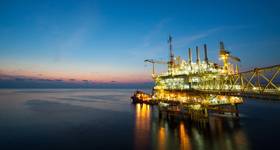
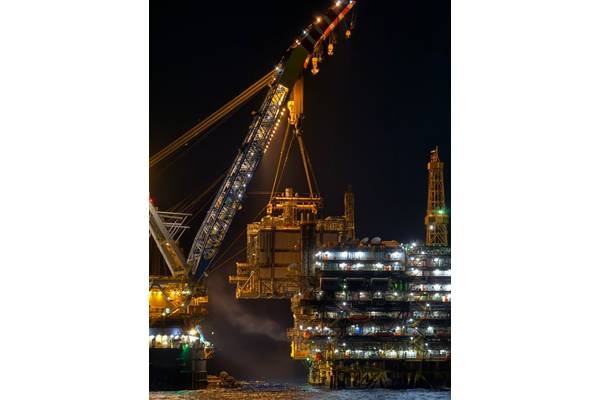
Weighing more than 5,200 tonnes and measuring approximately 45 meters by 31 meters with a height of around 45 meters, the module was constructed over a period of about two years and incorporates gas treatment systems. It has now been installed on the existing offshore platform at the Bouri field as part of the project's planned infrastructure upgrades.
According to Saipem, the lifting operation represents a key milestone in the execution of the project and demonstrates the company's heavy-lift and offshore installation capabilities.
With the lift completed, offshore activities will continue under Rosetti Marino's execution scope. These works include integration of the module onto the existing DP4 platform, as well as hook-up and commissioning activities covering the plant and its communication, safety and control systems.
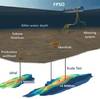
Additional pre-commissioning work is planned on approximately 28 kilometres of subsea pipelines linking the DP3, DP4 and Sabratha platforms. The pipelines are intended to transport recovered gas to the Mellitah treatment complex.
 (Credit: Saipem)
The Bouri Gas Utilization Project is being developed by Mellitah Oil and Gas, a joint venture between Eni and Libya’s National Oil Corporation (NOC). The project aims to recover associated gas currently being flared and transport it to the Mellitah complex for domestic use or export.
According to project information, reducing flaring is expected to lower carbon dioxide emissions by around 1.5 million tonnes of CO2 equivalent per year. The project is also expected to support production increases of up to approximately 2 million cubic meters of gas per day while improving the efficiency of existing infrastructure.

 Subscribe