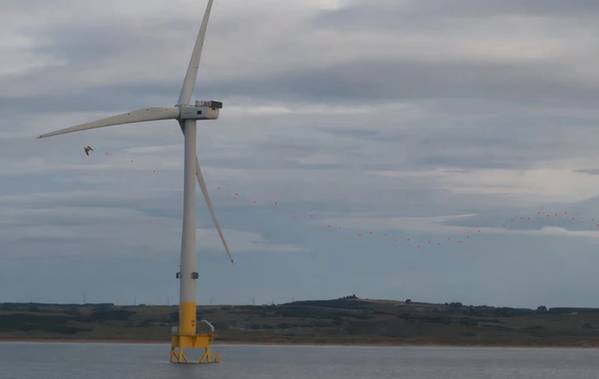
A new study conducted at Vattenfall’s Aberdeen offshore wind farm found no confirmed bird collisions during 19 months of monitoring, suggesting seabirds largely avoid turbine blades.
The research was carried out in collaboration with biodiversity technology company Spoor and analyzed video footage collected from one turbine between June 2023 and December 2024. The monitoring system captured about 95% of daylight hours and recorded 2,007 bird flight paths near the turbine.
Five flight paths were initially flagged as possible collisions, but further analysis found none involved actual impacts with the turbine. In most cases, birds were either flying well clear of the blades or displaying natural behaviors such as diving for food.
Researchers estimated that fewer than one collision would have occurred during the entire monitoring period.
The findings suggest that the wind farm is affecting seabirds far less than predicted in environmental assessments conducted before the project was built in 2018.
Previous radar, camera and GPS tracking studies at the Aberdeen site have also shown that seabirds typically avoid turbines by distances of about 100 to 200 meters, a behavior believed to significantly reduce collision risk.
“This study adds to a growing body of evidence showing how seabirds can avoid offshore wind turbines. The findings from Aberdeen Bay demonstrate that modern offshore wind farms can be operated with low risk to wildlife, especially when supported by robust, real-world monitoring. We remain committed to using the best available science and evidence to protect the natural environment while delivering low-carbon electricity,” said Eva Julius-Philipp, Director of Environment and Sustainability at Vattenfall’s Business Area Wind.
“This study demonstrates the value of long-duration, real-world monitoring in understanding how seabirds interact with offshore wind infrastructure. By combining AI-supported detection with detailed expert review, we can move beyond assumptions and measure actual behavior at turbine scale.
“The results from Aberdeen provide important evidence that avoidance behavior plays a significant role in reducing collision risk, and they show how modern monitoring approaches can support more accurate environmental assessments for future projects,” added Ask Helseth, Chief Executive Officer and Co-founder of Spoor.

 Subscribe