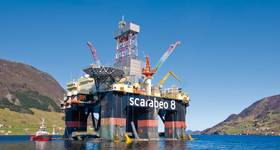
Artificial intelligence (AI) contributed savings and value creation of about $130 million for Equinor and its partners in 2025, as the Norwegian firm expanded the use of AI across offshore platforms and onshore facilities.
The company uses artificial intelligence to support industrial operations at scale, improving safety, efficiency and profitability, as it works to meet its ambitions on the Norwegian continental shelf through 2035 and support energy security.
Equinor has deployed a range of AI solutions across its operations and has identified more than 100 additional use cases.
One application involves monitoring more than 700 rotating machines using around 24,000 sensors across all facilities to predict failures and maintenance needs. The predictive maintenance system improves operational stability and safety while reducing the risk of sudden shutdowns that can lead to flaring and higher carbon dioxide emissions. The system has created value of $120 million since 2020.
AI-driven planning tools are also used in well and field development, generating thousands of alternatives and allowing specialists to focus on the most effective solutions. During Johan Sverdrup phase 3, the approach identified an option that saved the partnership $12 million, according to Equinor.
Artificial intelligence is also used to accelerate seismic interpretation, increasing capacity tenfold and allowing larger areas to be analyzed. In 2025, around 2 million square kilometers of seismic data were interpreted using AI tools, supporting geological understanding and exploration efforts on the Norwegian continental shelf.
“AI is a central part of our operations. Moving forward, AI will become even more important for solving industrial tasks safely, faster, more profitably, and at scale. With AI, we can analyze seismic data ten times faster, plan wells and field development in new and better ways and operate our facilities more efficiently.
"Industrial processes generate vast amounts of data, and we can use AI to 'produce' knowledge from this data. This has already been transformative and profitable, even though we are still early in the AI revolution,” said Hege Skryseth, executive vice president for Technology, Digital, and Innovation in Equinor.

 Subscribe