Repsol Norge has come up dry at the Stordal wildcat in the Norwegian Sea, according to the Norwegian Petroleum Directorate (NPD).
 |
|
Map of Stordal in PL 705, from the NPD. |
Upon completing drilling operations at Stordal (well 6705/7-1), Repsol encountered two reservoir intervals with a total thickness of about 200m of sandstone in the Nise formation with good to moderate reservoir quality. The reservoir rocks only contain weak traces of gas, and has been classified as dry, says the NPD.
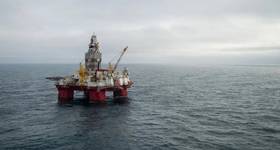
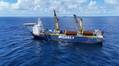
The well, at about 1404m water depth, was drilled about 80km northwest of the Aasta Hansteen field in the northern part of the Norwegian Sea, in PL 705, with the Transocean Spitsbergen. It was drilled to a vertical depth of 3250m below the sea surface and was terminated in the Nise formation in the Upper Cretaceous.
The well has now been permanently plugged and abandoned.
The objective of the well was to prove petroleum in Upper Cretaceous reservoir rocks (Nise formation). The NPD says that data acquisition and sampling were carried out.
According to the NPD, following a short break, the Transocean Spitsbergen will proceed to the UK shelf to drill three wells for Statoil.
Repsol is the operator of PL 705 with 40% stake. Partners include DEA Norge (30%) and M Vest Energy (30%).
Read more:

 Subscribe