The Dutch Topsector Energie-TKI Wind op Zee recently awarded a subsidy to Dutch wind energy technology developer Ampyx Power and the Netherlands Aerospace Centre (NLR).
The two organizations are undertaking a joint project aimed at optimizing the design of an aircraft that will be used to generate wind energy at high altitudes. The grant marks a new phase in the development of a scalable Airborne Wind Energy System (AWES) capable of generating several megawatts of electricity.
Thanks to its relatively small size, such a system can be implemented in locations that are currently unsuitable for wind energy development due to high costs or unfavourable wind conditions. Examples include sites located far inland or, conversely, far out at sea. In the future, one such system could supply renewable electricity to 2000 households.
The AWES being developed by Ampyx Power is a compact system that uses the strong winds prevailing at altitudes above 200 metres. One essential component of the system is an aircraft that is tethered via a cable to a winch which is located on a platform. The autonomous aircraft takes off and moves in a regular cross-wind pattern at high altitude, pulling the tether and causing the winch to rotate and generate electricity like a dynamo.
The research being undertaken by NLR and Ampyx Power is aimed at the development of the AP4 aircraft model, the commercial successor to the AP3 prototype currently being built by Ampyx Power.
Martin Nagelsmit-NLR: “In this subsidized project, NLR will be applying its expertise in the field of aircraft design, aerodynamic properties and software development. The starting point is that the aircraft must combine a considerable size with excellent manoeuvrability, in order to generate energy as effectively as possible and at the lowest possible cost.”
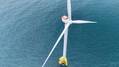
The AP4 aircraft is being developed to serve the European repowering market for first-generation offshore wind turbines that have reached the end of their life time. The existing foundations can be reused for the installation of platforms. Aircraft can be launched from such a platform using a catapult, and can also return to land on the platform with the help of the tether cable, e.g. for maintenance or repair purposes.
The new system will be more effective and quieter than the existing wind turbines. In addition, it will be cheaper and requires less maintenance. Because it is also a small and user-friendly system, it can be implemented all over the world – both onshore and offshore, for example on floating platforms. The developers expect that these characteristics will enable the AWES system to contribute to the worldwide energy transition.
Bob Meijer, Director of TKI Wind op Zee: “Research into and development of future technologies is of great importance to our energy transition. The results of this project will bring us closer to new ways of offshore energy generation. Developments of this kind offer many opportunities for start-ups and innovative companies.”

 Subscribe