Italian engineering group Saipem has secured an offshore engineering, procurement, construction and installation contract in Qatar with a total value of about $4 billion, of which its share amounts to approximately $3.1 billion.
The contract was awarded by QatarEnergy LNG for the COMP5 package of the North Field Production Sustainability Offshore Compression Complexes project. Saipem is executing the work in partnership with Offshore Oil Engineering.
The North Field Production Sustainability project forms part of QatarEnergy LNG’s strategy to maintain and increase output from the North Field, the world’s largest non-associated natural gas field, located off Qatar’s northeastern coast.
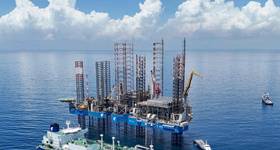
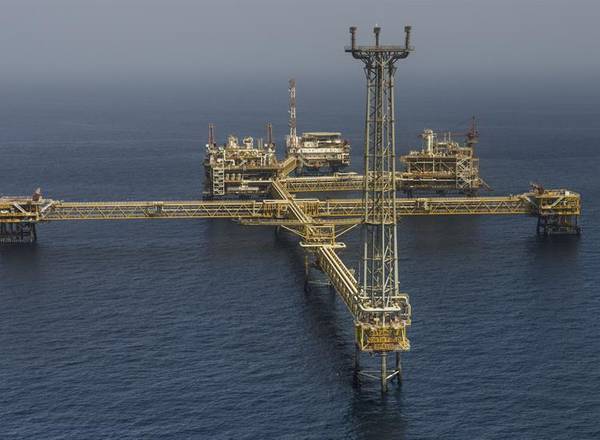
The COMP5 package has a total duration of around five years and includes the engineering, procurement, fabrication and installation of two offshore compression complexes. Each complex will comprise a compression platform, a living quarters platform, a flare platform supporting the gas combustion system and the associated interconnecting bridges.
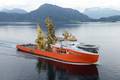
Each offshore complex will weigh about 68,000 tonnes. Offshore installation operations are scheduled to be carried out by Saipem’s heavy-lift vessel Saipem 7000 in 2029 and 2030.
The contract follows earlier awards of the COMP2 and COMP3 EPCI packages, which were awarded to Saipem in 2022 and 2024 and are currently under execution. The latest award further strengthens Saipem’s involvement in large-scale offshore projects in Qatar.
Qatar's North Field is one of the largest natural gas field in the world, with recoverable reserves of more than 900 trillion standard cubic feet (TSCF), or approximately 10% of the world's known reserves.
The North Field lies off the north-east shore of the Qatar peninsula and covers an area of more than 6,000 square kilometers, equivalent to about half the land area of the State of Qatar.
Additional gas quantities in the North Field are estimated at 240 trillion cubic feet, which raises Qatar’s gas reserves from 1,760 to more than 2,000 trillion cubic feet, and the condensates reserves from 70 to more than 80 billion barrels, in addition to large quantities of liquefied petroleum gas, ethane, and helium.

 Subscribe