European Union’s Horizon program has approved a $4.4 million grant for SHY project, which will develop a new power take-off (PTO) system with advanced control strategy, aimed at reducing the cost of wave energy.
SHY project, short for Seawater Hydraulic PTO using dynamic passive controller for wave energy converters, is a collaborative project whose aim is to develop key components of a seawater hydraulic PTO system, coupled with an advanced control strategy.
The dual focus aims to reduce the levelized cost of energy (LCOE) while minimizing the environmental impact at the same time.
The SHY project consortium comprises nine organizations across seven European countries, strategically chosen for their world-leading capabilities and knowledge.
Partners include leading universities National University of Ireland Maynooth and Technical University of Denmark, OEMs FibronPipe and LESER, specialist SMEs Julia F. Chozas, Applied Renewables Research, Marine Systems Modelling, the offshore test site PLOCAN, and wave energy technology developer Wavepiston.
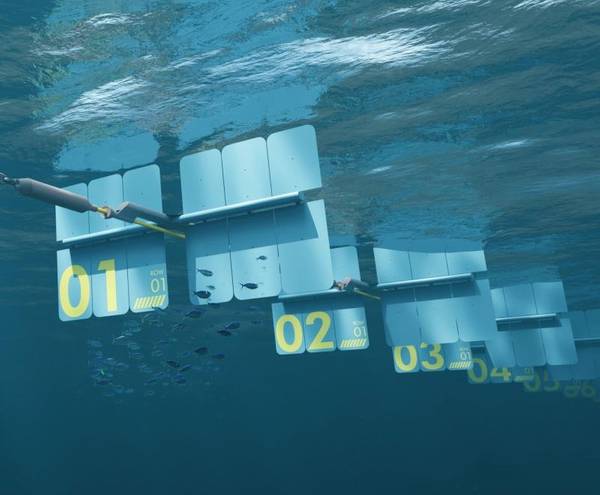
The choice of the Wavepiston technology ensures practical applicability and provides a reference framework for the development of key components, enabling comparability of results, benefiting not only the specific technology but also other hydraulic-based wave energy converters, according to the partners.
The SHY project's control co-design approach, which minimizes LCOE, considers the control strategy for power capture and the impact on capital and operational costs (CAPEX and OPEX).
Validation of PTO hardware and controllers will be conducted through hardware-in-the-loop (HiL) testing, followed by final validation using an offshore test bench to ensure real-world applicability.
“The SHY project recognizes the critical role of the PTO system in any wave energy converter. The development and validation efforts are centered around four principal and interconnected products, all aimed at reducing the LCOE, ensuring high reliability and operability of wave energy converters, and minimizing the overall lifecycle environmental impact,” the project partners said in a statement.

 Subscribe