Oceaneering International, Inc. has commissioned the construction of a subsea support vessel from BAE Systems. Expected delivery of this vessel is by the end of 1Q 2016.
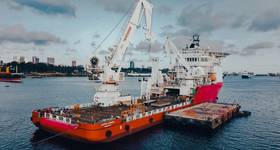
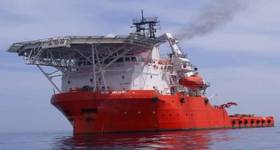
This vessel will be US-flagged and documented with a coastwise endorsement by the US Coast Guard. It will have an overall length of 353ft, a Class 2 dynamic positioning system, accommodations for 110 personnel, a helideck, a 250-ton active heave compensated crane, and a working moonpool. The vessel will be outfitted with two 13,000ft-rated Oceaneering work class remotely operated vehicles. The vessel will also be equipped with a satellite communications system capable of transmitting streaming video for real-time work observation by shore personnel.
The vessel will be used to augment Oceaneering’s ability to provide subsea intervention services in the ultra-deep waters of the US Gulf of Mexico (GOM). These services are required to perform inspection, maintenance, and repair (IMR) projects and hardware installations. IMR projects are expected to include chemical well stimulation and hydrate remediation. Hardware installations are expected to include flowline jumpers, flying leads, and subsea trees, pumps, and separators.
M. Kevin McEvoy, president and CEO, said: “We are pleased to announce the construction of a vessel that will allow us to maintain our competitive position to meet what we believe will be growing demand and more rigorous technical requirements for our ultra-deepwater subsea projects services in the GOM. Additionally, by being Jones Act compliant this vessel will minimize the need for and risks of vessel-to-vessel hardware transfers.
“Deepwater drilling rig use in the GOM is currently at a historically high level of 40 rigs, and recent industry market reports have forecast that it may grow to as many as 60 rigs by the end of 2015. Our vessel will be equipped to perform increasingly complex deepwater field development installation work and life-of-field IMR projects resulting from the increased drilling activity. In particular, this vessel will have a crane that is capable of handling lifts 100-tons greater than any of the vessels we currently operate. This will increase our capability to meet our customers’ demand to safely handle heavier subsea payloads in deeper water depths.”

 Subscribe