A normally unattended self-installing floating tower (SIFT) design has been selected as the development option for the North Sea Fyne development, the operator has revealed.
The design has been supplied by GMC Inc., which has a partnership with Enegi Oil, through its ABT Oil & Gas joint venture with unmanned production buoy technology firm ABTechnology.
Antrim plans to start drilling and installation activities at Fyne in late 2015, with first oil expected in late 2015 to early 2016, according to an Environmental Statement submiited at the end of March. The development is expected to have a seven-year field life.
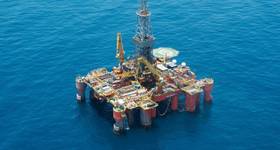
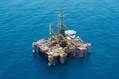
ABT Oil & Gas will earn a 50% stake in Fyne, which includes the NW Fyne and Central Fyne accumulations, on regulatory approval of an amended field development plan for Fyne, based on the SIFT design (pictured).
Antrim had originally considered a Sevan-design cylindrical floating unit for the development, 140 km from the nearest UK coastline and approximately 100 km to the east of the UK/ Norway median line.
But, the company looked for alternative when the design became uneconomic. Until last year, it had been looking at using an unmanned production buoy on the field. This morning, Enegi said that had been shelved in preference for the SIFT design due to the long lead times on the buoy design.
The SIFT design includes a foundation, a hull structure, and topsides. The Fyne development will comprise two production wells and one water injection well, drilled from a jack-up drilling rig positioned adjacent to the SIFT.
Oil from Fyne will be separated from gas and water on the SIFT topsides. Produced water from the development will be treated, then discharged to sea via a dedicated caisson.
The oil will be stored in the legs of the SIFT hull and transferred to shuttle tankers for transport onshore to a refinery. Produced gas from the FFD will be used to fuel the SIFT turbine generators, with the excess produced gas disposed of via flaring.
According to the Environmental Statement, the SIFT is based on deep water designs that have been used successfully for many years, with modifications to overcome the main challenges experienced by platforms located in 50-250m water depths.
The structure has been used for the Cell Spar and was installed at BPZ’s Corvina Field in offshore Peru in September 2012.
Read more - http://www.oedigital.com/component/k2/item/4514-self-installing-tower-offers-production-solution

 Subscribe