In a sustained low oil price environment, operators are facing increased pressure to reduce costs and minimise risk when making a final investment decision (FID) on a project, resulting in many capital intensive offshore developments being shelved.
Subsequently, offshore drilling and installation activity has been limited, impacting both subsea equipment orders and subsea vessel utilisation, resulting in significant supply chain consolidation.
As operators continue to achieve significant cost savings from a more competitive supply chain, Westwood expects subsea vessel operations and hardware expenditure to reach US$134 billion over the 2017-2021 period. This is forecast to grow at a 4% compound annual growth rate (CAGR), driven by an increase in the number of projects reaching FID in 2017-2018, compared to 2015-2016.
Despite the continuous stagnation in vessel day rates, caused by oversupply within the market, subsea vessel demand is set to grow at a 5% CAGR over the forecast period. This forecast increase in demand days will steadily support a slight improvement in vessel utilisation.
Over the forecast period, Western Europe will account for 15% of subsea vessel operations and hardware expenditure, due to the volume of existing wellstock and a large installed base of infrastructure, which will support well intervention and inspection, maintenance, and repair (IMR) activities.
The Americas and Africa will remain vital regions, as several “mega-projects”, including the Liza (Guyana), Appomattox (USA), and Libra (Brazil) developments, continue to support forecast greenfield expenditure.
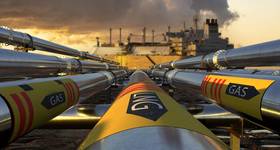
Notably, in the near-term, the line pipe and pipelay sector will remain buoyant, bolstered by the installation of large projects such as Turkstream, Nordstream Phase II, and numerous pipeline projects in the Middle East. This sector will account for 20% of total expenditure over the forecast period.
Despite concerns over the future of the offshore upstream industry, the sector remains a key focus area for IOCs as one of the few places where world-class discoveries can still be made, particularly in deepwater. As existing shallow water basins mature, new oil and gas reserves discovered in frontier areas such as offshore Guyana, Mauritania, and the undeveloped reserves in the East African basin, will present significant opportunities for the industry once the oil price improves.
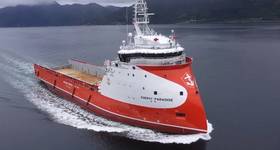
Image: Subsea 7's Seven Seas.

 Subscribe