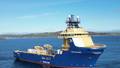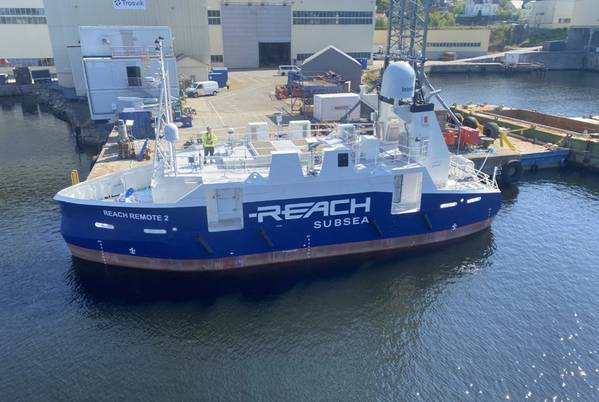
Norwegian subsea services firm Reach Subsea has sent off its Uncrewed Surface Vessel (USV) Reach Remote 2 to Australia to deliver services for Woodside Energy.
The Reach Remote 2 USV will perform reservoir monitoring on the Scarborough gas field, utilizing Reach Subsea’s proprietary gWatch technology.
gWatch is a reservoir monitoring technology widely used across Norwegian gas fields. It measures time-lapse gravity and seafloor deformation to detect small changes in reservoir mass and pressure.
These high-precision measurements significantly reduce uncertainty in gas reserves (GIIP) and aquifer influx, enhancing history-matching workflows and supporting more accurate production forecasts and infill well planning.
The deployment also marks the start of Reach Subsea’s inspection, maintenance, and repair (IMR) operations in Australia.
“Seeing the Reach Remote 2 vessel sail ‘down under’ to deliver world-class services to a company like Woodside Energy is a proud moment for all of us at Reach Subsea. This project clearly demonstrates that the transition to a robotic future is not a vision - it’s happening now.
“We are reducing HSE risks by removing personnel from hazardous environments, reducing operational costs, and cutting the carbon footprint of offshore activities by up to 90%. It’s a major leap forward for the industry and a testament to what innovative technology can achieve,” said Jostein Alendal, CEO of Reach Subsea.

 Subscribe