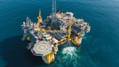
While high development costs are deeming many Australian liquefied natural gas (LNG) projects economically unfeasible, the country should stay focused on these rather than gambling on floating liquefied natural gas (FLNG) technology too soon, says an analyst with research and consulting firm GlobalData.
Rebecca Wilson, GlobalData’s upstream analyst covering Asia-Pacific, says that in addition to unattractively high capital expenditure (capex) investments, the Australian LNG industry is threatened by increasing market competition and production from both North America’s shale gas revolution and new international contracts.
These factors, in conjunction with Australia’s current LNG price environment and the prospect of the product’s selling price being lowered further, could affect investment in the country, with operators seeking out better project economics elsewhere.
“Technology allowing for FLNG facilities could reduce initial project costs in the near future, providing much cheaper alternatives to onshore equivalents and potentially transforming the market,” says Wilson. “FLNG projects, such as the Prelude field, which is due online in the next four to five years, are some of the first of their kind globally, placing Australia at the forefront of the technology. However, the FLNG concept is relatively new and issues are therefore likely to arise, resulting in higher operating expenditure and ultimate capex, and bringing into question just how much the projects will save.”
Wilson adds that calculated break-even prices currently associated with FLNG suggest that it may not positively impact the market for quite some time.
On the other hand, the technology could bring significant benefits to operators in terms of accessing remote fields and allowing an initial entrance into project start-ups.
“Given a number of FLNG projects in the pipeline, the technology is likely to be advanced and improved upon rapidly, further lowering costs and allowing FLNG to eventually become the potential game-changer that it is predicted to be,” says Wilson. “Despite this, it may be necessary for Australia to concentrate on bringing its onshore LNG development prices further in line with those globally, rather than investing in FLNG. This will ensure continued investment in the country’s LNG industry at a time when demand growth is peaking.”

 Subscribe