Total, operator of the Egina oil field offshore Nigeria, together with its construction and survey partners, has successfully installed a Fusion 6G subsea positioning network to support its development of the US$15 billion project. Supplied by Sonardyne, the acoustic technology specified for Egina, which is still ongoing, included a field-wide array of Compatt 6 seabed transponders.
Located 150km off the coast of Nigera, in water depths of up to 1750m, the Egina field covers an area of around 500sq mi.
Fusion 6G is Sonardyne’s sixth generation of long baseline (LBL) acoustic positioning system that can be used on tasks such as structure installation, spool piece metrology, ROV tracking and route surveys.
Planning for Fusion’s deployment at Egina had begun several months earlier and involved senior project managers and surveyors from Total and its sub-contractors, working closely with personnel from Sonardyne’s own survey support group (SSG). The SGG is a specialist department staffed by experienced offshore personnel, each of whom also possess knowledge of Sonardyne’s acoustic and inertial navigation technologies.
The work undertaken by the SGG for Egina included analyzing the proposed location for each of the Compatt transponders in the seabed network, and in doing so, verify that there was clear line of sight between each transponder. In addition, the SSG team mapped out seabed coverage and the expected positioning performance of the Compatts at all points of interest.
The wide-area transponder array was deployed, installed and calibrated eight days ahead of schedule and without any further direct support from Sonardyne and the SSG.
“We will be using [the array] to support ongoing field construction activities throughout the rest of this year and into the 2016 season,” said Frederic Auger, chief surveyor at Total.
The Egina field infrastructure will include an FPSO, an oil offloading terminal and subsea production systems that will included 52km of oil and water injection flowlines, 12 flexible jumpers, 20km of gas export pipelines, 80km of umbilicals, and subsea manifolds. Production at the field is expected to reach 200,000 b/d at its peak.
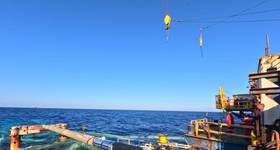
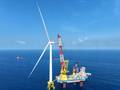
Image: Compatt 6 transponder installation/Sonardyne

 Subscribe