Proserv has secured a full deployment contract with Equinor to install its ECG™ cable monitoring technology at the 402 MW Dudgeon Offshore Wind Farm off the Norfolk coast, UK, with deployment scheduled to commence in 2027.
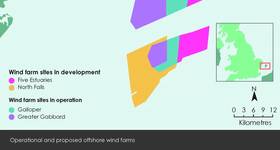
Located approximately 32 km off the north Norfolk coast, Dudgeon comprises 67 wind turbines and generates enough renewable electricity to power approximately 430,000 UK homes.
Proserv’s ECG™ Business Unit will deploy its advanced monitoring technology to provide continuous visibility of cable and termination health – an area of offshore electrical infrastructure where developing faults can have significant operational and financial consequences.
By combining real-time monitoring with advanced analysis, ECG™ enables operators to identify emerging issues earlier, supporting a more proactive approach to asset management and helping prevent failures before they lead to unplanned downtime.
The deployment will also incorporate Proserv’s Distributed Electrical Sensing (DES) technology. Using existing fiber infrastructure and passive sensing technology, DES provides high-fidelity current and voltage measurements across the network, delivering enhanced visibility of electrical performance in remote and difficult-to-access environments.
Barry Frost, Director, ECG™, Proserv, said: “Dudgeon is a critical part of the UK’s renewable energy infrastructure, and as the industry continues to scale, the focus must move beyond generating more power to protecting the infrastructure that delivers that power reliably to the grid.
“ECG™ gives Equinor greater visibility of the condition and performance of its electrical assets, helping identify developing issues before they become costly failures. By combining ECG™ with DES, we can provide an even richer picture of network performance and give the operator greater confidence in the availability and security of site generation.
“Ultimately, this is about moving from reactive maintenance to proactive asset management reducing risk, improving reliability and helping maximize the value of offshore wind assets over their operational life.”

 Subscribe