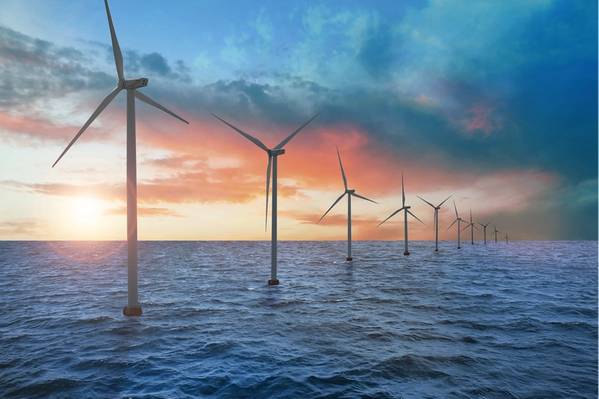
The Bureau of Ocean Energy Management (BOEM) has released two new studies on offshore wind energy in the Gulf of Mexico.
The first study, “Gulf of Mexico Offshore Wind Energy Hurricane Risk Assessment” analyzed hurricane risk to wind turbines operating in the Gulf of Mexico. This study concluded that as a minimum, an IEC ”Typhoon Class” wind turbine would be needed for the design of offshore wind turbines in more hurricane prone areas, such as in the Gulf of Mexico.
The second study, “Assessment of Offshore Wind Energy Opportunities and Challenges in the U.S. Gulf of Mexico” discusses opportunities and challenges for offshore wind energy development in the Gulf. The results indicate that offshore wind energy has the potential to be a viable clean energy option.
The U.S. Department of Energy’s National Renewable Energy Laboratory (NREL); the National Oceanic and Atmospheric Administration’s National Centers for Coastal Ocean Science; Applied Research Associates, Inc; and CSS, Inc. collaborated on the studies, funded through an interagency agreement between NREL and BOEM.
The results of the studies will inform federal, state, and local strategic renewable energy planning over the next decade.

 Subscribe