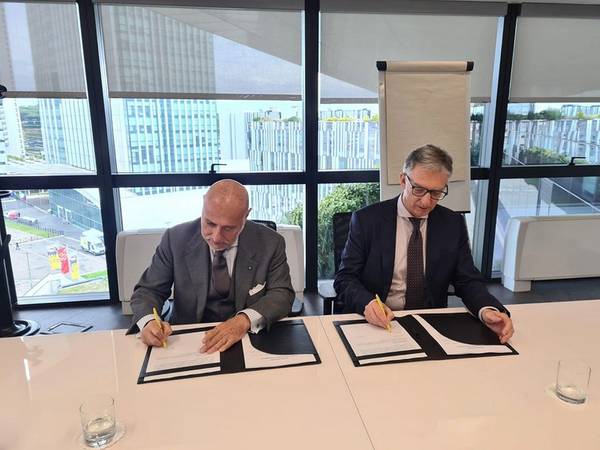
RINA, an international company specializing in inspection, certification, and engineering consultancy, and Italian energy company Eni have signed an agreement to jointly develop initiatives that can contribute to the energy transition and decarbonization of their respective operations and particularly maritime transport.
The agreement focuses on the use of HVO (Hydrogenated Vegetable Oil) biofuel produced by Eni in its Venice and Gela bio-refineries, as well as of other energy carriers such as “blue” or “green” hydrogen and ammonia from biogenic, renewable, or waste raw materials not competing with the food chain, in the naval sector.
The partnership encompasses the development of initiatives for the logistics and value chain of new energy carriers, and the adoption of certified methods for the "taxonometric" calculation of the emissions benefits they will generate.
Eni and RINA said they would also consider carrying out experiments and pilot projects related to the on-board capture of CO2 emissions in order to further contribute to pursuing the maritime sector's sustainability goals.
Ugo Salerno, Chairman and CEO of RINA, said: "Cooperation between companies is the way forward towards the common goal of decarbonising industry and transport. By sharing know-how and experience with Eni, we will contribute to developing innovative energy supply models. Our collaboration will begin by focusing on the maritime sector, a diversified and hard-to-abate industry that can draw on initiatives already adopted by other industrial segments to decarbonize operations."
Giuseppe Ricci, Chief Operating Officer for Energy Evolution at Eni, said: "Eni and Rina can make a significant contribution to the decarbonization of maritime transport with their wealth of expertise and technological capabilities. Following a technology-agnostic approach, we are exploring multiple solutions. Thanks to this agreement, we will have the opportunity to study and develop them in the short, medium, and long term, with the objective of making maritime transport more sustainable and meeting the needs of shipowners and logistics operators."

 Subscribe