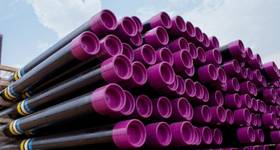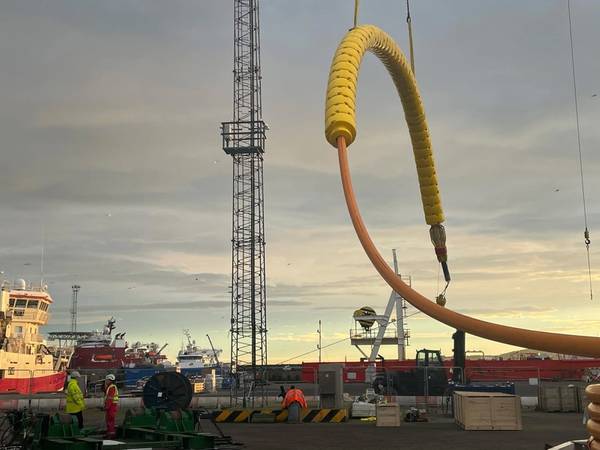
Thermoplastic composite pipe manufacturer Strohm said Tuesday it had supplied Shell with a static Thermoplastic Composite (TCP) Riser to support operations at one of its Southern North Sea assets.
"The availability of TCP through Strohm’s “TCP on Demand” model and the ability to install end-fittings offshore enabled flexible, quick and easy installation," Strohm said.
Strohm said it was able to offer a fast-track delivery of its 2.0-inch 10ksi stock product, including all ancillaries, to support Shell’s tight schedule.
"In a mature basin such as the North Sea, the pipeline infrastructure is ageing and, in some cases, pipelines are in need of replacement. For such a situation, TCP is an attractive solution. In this particular case for Shell, the TCP could be terminated above the J-tube, allowing for a smaller existing J-tube to be used, avoiding the need for any welding or curing. Strohm, together with their trusted partners, included a fast-track supply of the J-tube bellmouth, centralizer, bend restrictors, hang-off clamps, providing a full solution with a quick turnaround," Strohm explained.
According to Strohm, its TCP is a strong, corrosion resistant composite pipe solution with a long, maintenance free service life.
"TCP is spoolable and delivered in long lengths allowing operators to use existing field support vessels on long-term charter rather than mobilising dedicated pipelay assets, making significant efficiencies and supporting lower carbon emissions targets. TCP has a 100% track record of no failures on installed pipe," the company explained.
Strohm also says that the technology is increasingly being considered in the renewables sector, including offshore hydrogen and carbon capture and storage, as well as in conventional oil and gas applications. The project for Shell saw the technology being delivered on a subsea pallet.

 Subscribe