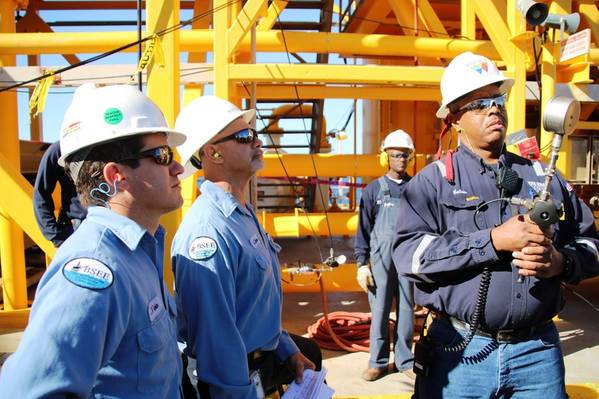
U.S. President Donald Trump's proposed fiscal year (FY) 2020 budget submitted to Congress on Monday includes $200.5 million for the Bureau of Safety and Environmental Enforcement (BSEE) and $193.4 million for the Bureau of Ocean Energy Management (BOEM), up from the respective $199.9 million and $179.3 million requests for FY 2019.
The requested BSEE budget includes $129.9 million of appropriated funds and $70.6 million in offsetting collections of revenue from rental receipts, and cost recovery and inspection fees. This $70.6 million of revenue accounts for 35 percent of the requested budget.
“President Trump’s proposed FY 2020 budget supports BSEE in continuing its mission overseeing safe, environmentally sustainable and robust offshore energy production,” said BSEE Director Scott Angelle. “As the administration works to promote sustained domestic energy exploration and production, BSEE is continuing its ‘We Can Do It All’ approach by increasing safety and environmental stewardship while at the same time supporting robust energy production on the U.S. outer continental shelf.”
“This administration calls for boosting domestic energy production to stimulate the nation’s economy and strengthen America's energy security, while providing for environmental stewardship,” said BOEM’s Acting Director Walter Cruickshank. “The FY 2020 budget request allows BOEM to continue its efforts to advance these goals as part of our statutory mission.”
Randall Luthi, President of industry group National Ocean Industries Association (NOIA), said the proposed budget includes “some very positive signs for the offshore energy industry,” Luthi said some of the positive signs include increased or continued funding for the safe and responsible development of offshore oil, natural gas and wind, scientific research to inform energy development and exploration, streamlined permitting processes and offshore revenue sharing with states.
“However, some of the budget recommendations should be rejected by Congress,” Luthi said. “One example is expanding offshore inspection fees to non-rig units, which has been rejected by Congress in the past.
“Overall, the budget complements the President’s soon to be updated draft proposed national offshore energy plan to provide Americans with access to the energy resources our country needs and ensure taxpayers receive a fair return from their development. In total, the budget is a statement of success for ‘all of the above’ American energy development and puts the President’s vision of energy dominance within our grasp,” Luthi said.

 Subscribe