Innovation was a key theme at the opening plenary at OTC Brasil 2013 this week.
Renato Bertani, CEO of Barra Energia do Brasil and president of the World Petroleum Council discussed how innovation has changed the oil and gas industry for the better.
“The role of innovation - thinking different, challenging paradigms - is a key accomplishment of our industry,” he said. “No one would think we could produce oil from rocks [shale]. Someone challenged that idea, and now we’re going through a revolution in unconventional.
“Ten years ago, no one thought reservoirs under the salt could be commercially viable,” he continued. “A few very expensive wells later, that whole concept is turned upside down.”
Thore E. Kristiansen, senior vice president and president of Statoil Brazil, discussed how innovation is helping the Norwegian explorer produce heavy oil at its Peregrino field, Statoil’s largest development outside Norway.
Kristiansen said Statoil believed it could double recovery at the field when it acquired it from Maersk in 2012. The oil at Peregrino is heavy quality, measured at 14 API. The company opted to drill 30 long horizontal wells with open hole gravel pack and screens at Peregrino.
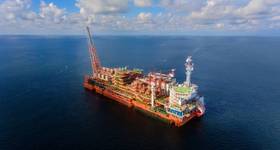
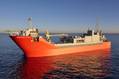
Some of the other technology deployed at Peregrino included artificial lift with electrical submersible pumps (ESPs), topside boosting, and water cut (>50%) downstream wellheads. Additionally, The Peregrino FPSO vessel supplies continuous water circulation and generates enough heat to separate the viscous oil and water. Kristiansen attributed Statoil’s success at the field to its research and development center where it studied heavy oil flows.
Looking into the future, Bertani’s presentation centered on long-term sustainability, especially with world fuel consumption set to grow over the next few decades. WPC’s data shows a steady demand for oil, natural gas, and coal increasing from 88 million b/d to 110 million b/d by 2040.
The challenge, Bertaini said, is replenishing resources. He said this could be done using the same formula: technology, innovation, and capital. “Massive technology requirements and huge amounts of capital are needed,” he said.
Kristiansen ended his speech on a similar note, saying that newer technologies are needed to move the industry forward. “Technology is a key enabler for us in Brazil,” he said.
 Subscribe