Halliburton's wireline and perforating business introduced the Reservoir Monitor Tool 3-Detector (RMT-3D) pulsed-neutron tool that helps solve for water, oil, and gas saturations within reservoirs using three independent measurements (Sigma, CO, and SATG). Relying on only one or two independent measurements can reduce the accuracy of results depending on conditions in the formation and formation fluids. The RMT-3D tool allows operators to calculate saturations using different methods to acquire accurate results. The data is collected with one trip in the hole.
During secondary and enhanced oil recovery methods, which can involve water, steam, and CO2 flooding, it is imperative to monitor changing saturations accurately within formations to optimize recovery rates. The RMT-3D analysis packages are can be used in recovery projects because they are designed to work in these environments. Using the independent measurements helps to correct saturations for influences from the secondary and enhanced recovery fluids, so better oil saturation profiles can be calculated. The tool is deployed through the casing to log and calculate saturations and other properties that help identify and characterize pay zones.
The RMT-3D tool has been successfully deployed in the Permian Basin in a CO2 enhanced recovery flood to acquire saturation profiles and formation properties of the reservoir during one trip in the hole.
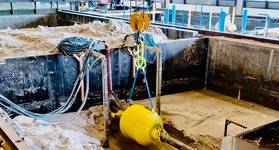
Image: RMT-3D/Halliburton

 Subscribe