Trelleborg has been awarded a contract for the supply of elastomeric bearings to Statoil’s Johan Sverdrup oil field, offshore Norway.
Johan Sverdrup is on the Utsira Height in the North Sea, 160km west of Stavanger.
The oil field will be operated by electrical power generated onshore, significantly reducing offshore emissions of climate gases. Daily production during the project’s first phase is estimated at 440,000 b/d, while peak production is estimated to reach 660,000 b/d -25% of all Norwegian petroleum production.
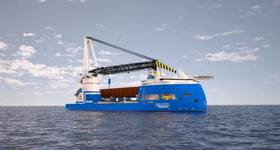
The riser platform – the largest of the four platforms comprising the project’s field center – will be the first of the Johan Sverdrup topside to be installed in 2018. Trelleborg will manufacture and deliver 96 custom designed, sliding elastomeric bearings for use across the 23,000 ton platform’s six support points that will be in direct contact with the heavy transport vessel that will deliver the topside, which is being manufactured in South Korea, to the field.
JP Chia, engineering manager for Trelleborg’s engineered products operation, says: “The Johan Sverdrup oil field is one of the largest ongoing projects in the North Sea. Therefore, it is vital that the finest quality bearings were used to successfully secure each of the platform’s support points. We design and manufacture all of our elastomeric bearings specifically for their application, to ensure that they always perform exactly as required.”
Trelleborg’s elastomeric bearings are steel plate laminated and installed between the hull of the facility and its modules. They accommodate axial, shear and rotational movement to keep the modules safe from impact, damage and deformation. Similarly, they prevent the concentration of excessive strains and stresses around the mounting points of the modules and the hull caused by adverse sea and weather conditions.
Trelleborg’s engineering team check the design for specified loads and deformations and the fatigue performance by means of crack growth analysis calculations. After production they are a 100% individually tested at the company’s laboratory for full-scale research and development. The press used for the tests is the largest in the world of its type, with a load capacity of 18,300 metric tons and weighing in at 600 tons.

 Subscribe