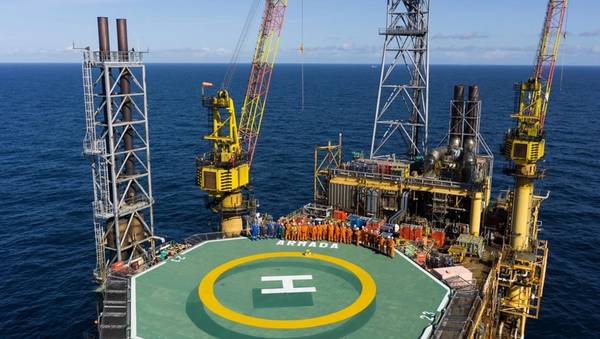
Oil and gas firm Chrysaor, acquired by Harbour Energy in 2021, has been fined over $200,000 for exceeding its vent consent by more than half of the permitted amount and failing to identify and inform the North Sea Transition Authority (NSTA) of the breach at Armada hub in Central North Sea for seven months.
Chrysaor blamed the breach on high winds preventing it from relighting the flare on the Armada platform which is 132 nautical miles East of Aberdeen.
The Armada processing hub serves Hawkins, Fleming, Drake, Maria and Seymour fields and has a capacity of more than 20,000 barrels per day.
In January 2022 an unplanned shut-in led to one vent event. This was followed in August the same year when there was a further event after a start-up from a shutdown - in October high winds caused the flare to extinguish with the operator being unable to relight the flare for three days.
And in November, the flare was extinguished due to a depressurisation and there was a delay in relighting due to the weather conditions. This venting continued for three days.
In total, Chrysaor vented 370.046 tonnes at Armada from 1 January 2022 to 31 December 2022, exceeding its consent by 145.566 tonnes, almost 65%. Venting consent was breached in October 2022 and Chrysaor failed to inform the NSTA until May 2023, which indicated that it was unaware of the amount that it had vented.
The NSTA said it repeatedly warned licensees that complying with regulatory obligations is vitally important - both to meeting the aim of net zero by 2050 and retaining public confidence in the industry.
In determining the size of the fine of $201,000 (£150,000), the NSTA took into account that Chrysaor was unaware that it had exceeded for approximately seven months; indicating that it was not tracking its venting, and had poor systems and processes in place to monitor its venting volumes.
However, the fact that Chrysaor did bring the breach to the NSTA’s attention, fully co-operated with the investigation, had no previous sanctions and has taken steps to prevent future vent consent exceedances were among the mitigating factors considered, the regulator noted.
“Reducing the emission of harmful greenhouse gases is vital, and the NSTA will continue to support industry in its efforts to reach net zero by 2050.
“In the few cases where companies fail to comply with requirements, the NSTA will not hesitate in applying tough sanctions,” said Jane de Lozey, NSTA Director of Regulation.
Industry has responded well with the most recent Emissions Monitoring Report noting a 28% reduction in production emissions between 2018-2023.
But the NSTA signaled its determination to crack down even harder when there are breaches in the OGA Plan, which emphasized that operators should take action and budget to reduce flaring and venting, and in an Open Letter to industry published in December 2024 which made clear that the starting amount to consider the fine for breaches of flaring and venting consents occurring after January 1, 2025 would be $ 671,000 (£500,000).
In Chrysaor’s case, the fine of this size did not take effect as the investigation was started before the Open Letter was published.

 Subscribe