Glamox has delivered smart lighting to the offshore converter platform DolWin epsilon, built by consortium consisting of Seatrium and Aibel, for Tennet’s DolWin5 grid connection system in North Sea.
European grid operator TenneT is in the process of installing an offshore grid connection system in the North Sea, which will deliver electricity from three wind farms some 100 km off the German coast.
The innovative DolWin 5 project eliminates the need for a wind farm substation, as the electricity generated will be transmitted directly as three-phase AC current to the giant DolWin epsilon converter platform.
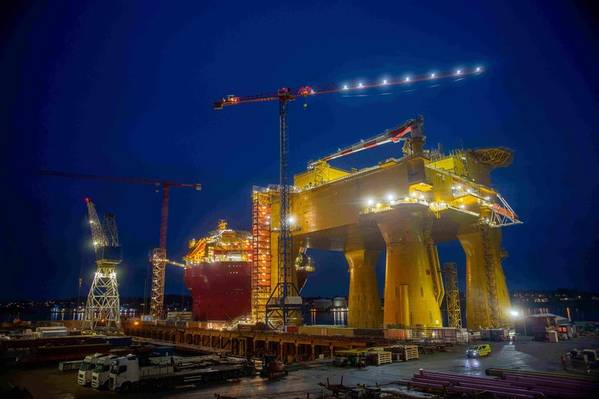
A consortium consisting of Seatrium and Aibel is building and preparing DolWin epsilon, a High Voltage Direct Current (HVDC) offshore platform. Once operational, it will convert approximately 900 megawatts (MW) of green electricity from the wind farms, enough to power more than one million households.
Glamox has delivered lighting to the offshore converter platform DolWin epsilon. In total, it provided 2,084 marine-grade luminaires and the systems to remotely monitor and test emergency lighting via the platform’s SCADA system.
“Most of the time, this gigantic platform will be unoccupied, but the lighting is needed for remote inspection and for visiting crews and maintenance teams. It’s extremely costly to repair or swap out lighting when it’s offshore. Therefore, our certified marine luminaires must be long-lasting and able to cope with the harshest conditions of the North Sea. We know lives depend on it,” says Eirik Hagem, Head of Business Development for Glamox’s Offshore Wind business.
The offshore converter platform DolWin epsilon is currently docked at Aibel’s yard in Haugesund, and later in 2025 the company will commission, transport and install the complete converter platform offshore.
The Dolwin epsilon offshore converter platform is unmanned, but provides accommodation for 50 people, a helipad, a crane and a lifeboat.
The three-phase alternating current generated by the wind farms at sea is converted into direct current on the platform, before it is transported south to Hamswehrum near the river Ems in East Frisia via a 100-kilometre-long subsea cable.
Next, a 30-kilometre-long land cable leads to the land converter station in Emden. The current is then converted back into three-phase alternating current and fed into the extra-high voltage grid on land.

 Subscribe