Dominion Energy has stated that the 2.6GW Coastal Virginia Offshore Wind (CVOW) project is now approximately 50% complete and remains on track for on-time completion at the end of 2026.
CVOW is credited with creating 2,000 direct and indirect American jobs and $2 billion of economic activity.
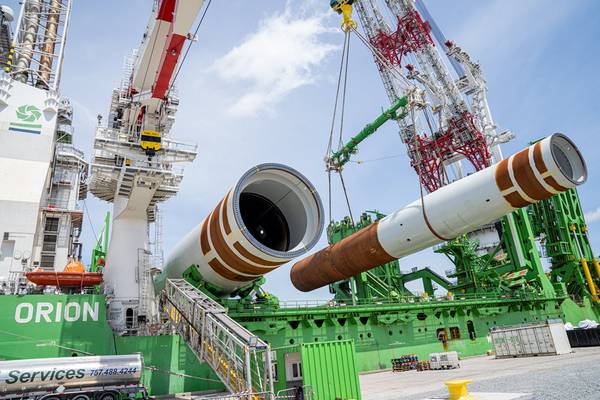
CVOW continues to achieve significant construction milestones including the successful installation of the first 16 transition pieces which serve as the junction between the foundation and tower for each of the 176 wind turbines.
Delivery of the first of three 4,300-ton offshore substations to the Portsmouth Marine Terminal in Virginia Beach occurred at the end of January.
Fully fabricated monopiles, transition pieces, undersea cable and other major components continue to be delivered in preparation for on-schedule installation. Wind turbine tower and blade fabrication is now underway, with nacelle fabrication to begin later this quarter.
SiemensGamesa, the project’s wind turbine supplier, is manufacturing the same turbine model for CVOW as has been successfully fabricated, installed, and is now operating at the Moray West offshore wind project.
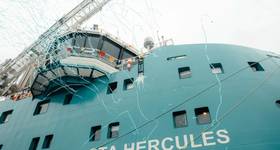
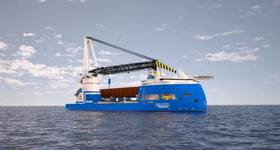
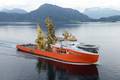
Charybdis, the American built, flagged, and crewed, wind turbine installation vessel is now 96% complete and has commenced sea trials in Brownsville, Texas.
Estimated total project costs, inclusive of contingency and excluding financing costs, have increased by approximately 9%, from $9.8 billion to $10.7 billion. This is the first and only increase since the original project budget was submitted to the Virginia State Corporation Commission (SCC) in November 2021, approximately 39 months ago.
Relative to the original budget of $9.8 billion, the cost increase is attributable to higher network upgrade costs which are assigned by PJM, the regional electric grid operator, to CVOW as part of the generator interconnect process and higher onshore electrical interconnection costs. Higher network upgrade cost estimates by PJM reflect the significant increase in demand growth that require incremental generation and transmission resources across the system.
Network upgrades do not impact project construction or timeline and represented the largest unfixed cost input for the project.
Aside from changes to onshore costs, aggregate costs for other project costs, including offshore, have remained in-line with the original budget.
The project’s current unused contingency of $222 million, up ~$100 million from last update, now represents ~5% of remaining project costs.
The project’s updated levelized cost of energy (“LCOE”) of ~$62 (vs. the prior estimate in November 2024 of $56) continues to benchmark very favorably with new generation alternatives including solar, battery and gas-fired generation, says Dominion.

 Subscribe