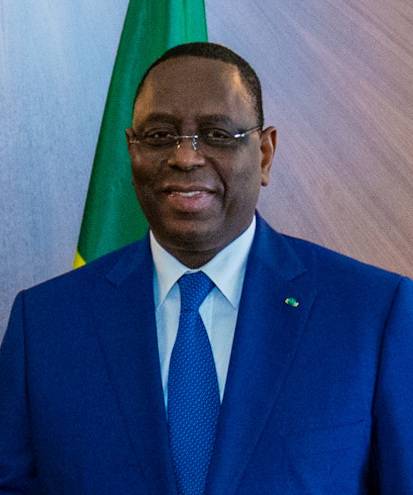
Africa needs harmonized oil legislation to avoid ruinous competition among its oil-producing nations as they vie for investors, Senegal's President Macky Sall told an oil conference on Thursday.
Sall said that as some developed nations push for an end to investments in fossil fuels, particularly gas, African countries needed to attract partners who are financially and technically reliable with clear legislation that would offer guarantees to investors, and protect national interests.
"I have as ambition to push at the level of the African Union, that we should have a harmonized legislation in the petroleum and also the mining sector so as to avoid ruinous competition with the aim of attracting investors," he said.
Sall will take over the rotating chairmanship of the African Union continental body in January for a year.
He told the gathering that included major oil operators and ministers from the region that African nations should make efforts to participate in projects as equity shareholders rather than being contented with royalties.
"There will be no fatality, nor oil curse, or ruinous competition if there is the political will to cooperate across the board," Sall said, citing Senegal's cooperation with Mauritania on the Greater Tortue Ahmeyim Liquefied Natural Gas project.
Mauritania's oil minister Mohamed Abdel Vetah told the conference that activities had resumed at the project after most obstacles hindering progress were removed. First gas is expected by the end of 2023. He did not provide details on the obstacles.
"We'll be able to produce 2.5 million tonnes per year, which will get Senegal and Mauritania into the list of gas-producing countries," Vetah said.
He added discussions were underway on phase two of the project which could see peak production of up to 10 million tonnes annually in three overlapping phases.
"We are having good discussions on phase two and if that phase is confirmed, at some point in 2022, and if our partners Kosmos and BP decided to speed up phase two, it will be a great turning point for our two countries," Vetah said.
Vetah said Mauritania would also speed up talks with Kosmos on the recently discovered BirAllah field early next year.
"We are hoping to develop it with Kosmos as soon as possible," he said.
(Reporting by Aaron Ross Writing by Bate Felix Editing by Mark Potter Editing by Jason Neely)

 Subscribe