Mexico’s oil and gas industry entered a new era on Monday when President Enrique Pena Nieto signed the long-awaited secondary legislation of the country’s recent energy reform into law, opening the country to private investment.
The signing ceremony took place at the National Palace in Mexico City on 11 August 2014. Pena Nieto remained triumphant as he thanked lawmakers for their help in passing the historic reform.
“With approval of the energy reform, we conclude the legislative work of the important reform cycle we embarked on the second day of our administration,” he wrote on his website.
“It is a great achievement of Mexican democracy. (These) are structured reforms that will free the country from the shackles that have prevented from developing faster,” he said.
With the signing of the legislation Pena Nieto says Mexico will be better able to use its energy resources, accelerate growth, and create more jobs.
In a statement issued by Pemex, the company said the reform opens the door to private investment and technologies, which will increase energy production in a transparent, efficient, competitive and sustainable way.
"With this reform we can extract oil from deep waters and better leverage our coarse shale deposits. From this, the country will reduce its dependence on foreign and ensure energy security,” Pena Nieto said.
The reform also grants Pemex full control of its budget. "Pemex will have full autonomy to decide how to allocate their resources, respecting a goal of debt and a ceiling for payment of staff salaries to be approved by Congress and will not need the approval of the Ministry of Finance," said Mexico's Secretary of Finance Luis Videgaray.
Pena Nieto also laid out 10 measures he plans to enact in the short-term, which include announcing assignments for Round Zero this Wednesday, 13 August, with work beginning immediately on Round One.
Pena Nieto also said plans are in place to establish a National Energy and Natural Gas Control Center, and by September, he expects to create the Mexican Petroleum Fund for Stabilization and Development, as well as create the Strategic Program for Human Resources Training in hydrocarbons, which will include scholarships.
By the end of August, Pena Nieto says nominations will be sent to Mexico’s Senate for commissioners for the National Commission of Hydrocarbons and Energy Regulatory Commission (Comisión Nacional de Hidrocarburos y las Comisión Reguladora de Energía), as well as nominations for independent directors for Pemex and CFE, and independent members for the technical committee of the Mexican Petroleum Fund for Stabilization and Development.
By October, rules for the secondary legislation will be published. That same month, plans for restructuring and modernization of the Mexican Petroleum Institute will be presented to strengthen its mission as the national body for research and development industry.
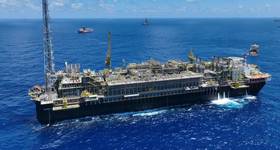
Image: Pemex.
Read more on Mexico's energy reform:
Energy reform heads to Mexican president
Sinopacific enters Mexican market
Mexico's energy reform marches on
PEMEX to invest billions in Cantarell
Mexico's energy reform: challenges and opportunities

 Subscribe