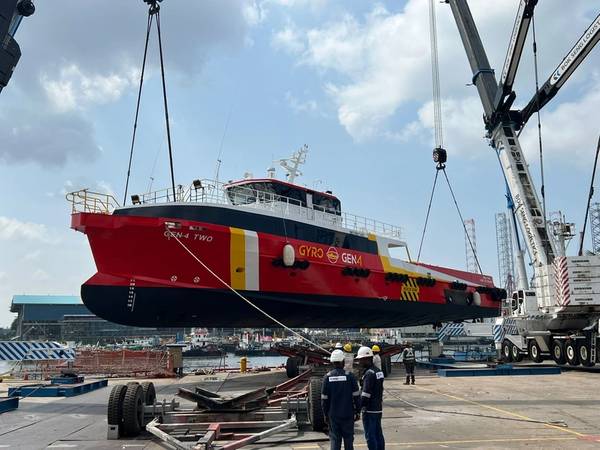
Singapore-based shipbuilder Strategic Marine announced it has commissioned a study to validate greenhouse gas emissions reduction using the Sea Forrest Green Cabin Energy Saving System, its latest system in collaboration with Sea Forrest.
Sea Forrest delivers energy management solutions through marine electric and hybrid propulsion, marine charging and marine energy storage systems. The deployment of Green Cabin Energy Saving System marks the first time such a system is being used on board fast crew boats (FCB). The system is a hybrid solution where an energy storage system captures and harnesses energy generated by the main engines to utilize for various applications on the vessel, such as the hotel load.
The study, to be conducted by the Maritime Energy and Sustainable Development Centre of Excellence (MESD CoE) at Nanyang Technological University, Singapore (NTU Singapore), will assess the system’s carbon mitigation potential based on different scenarios and provide recommendations to improve its effectiveness. The study will include data collected from actual sea trials carried out on a FCB that is scheduled to be delivered in the third quarter and deployed in Southeast Asian waters.
By optimizing the engine’s operating parameters, such as load and speed, the system can potentially reduce fuel consumption and lower emissions, contributing to more sustainable and environmentally friendly operation of the FCB. This is done by aligning these parameters with the vessel’s optimal efficiency range, maximizing fuel use and minimizing energy waste. The system has the advantage of reducing the number of dedicated diesel generators and potentially decrease the vessel’s overall fuel consumption.
Chan Eng Yew, Chief Executive Officer, Strategic Marine, said, “We are excited to present our latest decarbonization solution and very excited to commission a second study with NTU’s Maritime Energy and Sustainable Development Centre of Excellence to better understand how and when the system offers benefits.
“Our hybrid vessels are gaining popularity as the drive to reduce maritime industry greenhouse gas emissions gains momentum. We are happy to be able to also contribute to the body of research as the industry introduces more sustainability solutions.”
A previous study with MESD CoE compared the efficiency of traditional diesel-powered and hybrid-powered crew transfer vessels (CTV). Both vessel types are generally deployed to support the offshore markets and wind farms.
 Subscribe