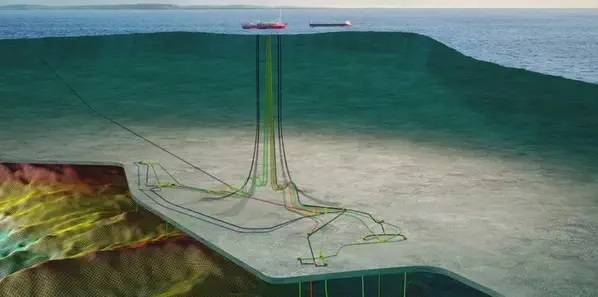
Oilfield services firm Baker Hughes said Wednesday it had secured a significant order from the Japanese FPSO supplier MODEC to supply gas technology equipment for the BM-C-33 project in the Brazilian pre-salt Campos area.
The project is developed by Equinor with partners Repsol Sinopec Brasil and Petrobras and MODEC is supplying an FPSO for the $8 billion BM-C-33 project, sanctioned in May 2023.
For Baker Hughes, the order comprises of turbomachinery equipment – including LM2500 gas turbine generators and steam turbine generator technology – for a combined cycle power generation solution to be installed in the BM-C-33 FPSO to reduce the project’s carbon footprint, as well as process design engineering and balance of plant.
According to Baker Hughes, combined cycles are an important trend in the offshore oil and gas industry, as they enable the reduction of the overall FPSO carbon emissions. Baker Hughes expects a more than 20% carbon emissions reduction in this project versus similar open cycle FPSOs with the same power demand.
This is the second combined cycle power generation FPSO project developed by Baker Hughes for MODEC and Equinor in Brazilian deep waters, following the award for the Bacalhau FPSO in 2020.
For the BM-C-33 project, Equinor and its partners expect the FPSO to be able to achieve a carbon intensity target of less than 6 kg/barrel of oil equivalent (BOE) over the field’s lifetime, while the global industry average is 16 kg CO2 per barrel.
 Subscribe