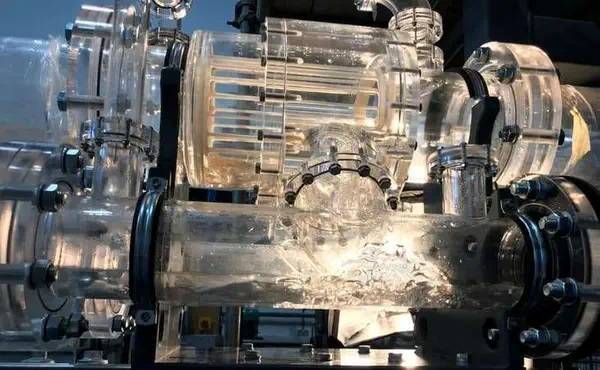
To develop stranded gas reserves in remote regions, chemical engineers from The University of Western Australia are cooperating on novel cost- and carbon-reduction technology.
Professor Zachary Aman, Chevron Woodside Chair in Long Subsea Tiebacks, Research Fellow Dr Bruce Norris, and a team of researchers from UWA School of Engineering will provide complex simulation expertise to The Enhanced Subsea Gas Tieback Project led by Worley – an engineering services company.
"Over the past decade, UWA has established itself as a world leader in characterizing and predicting complex flow behaviors, with industry-focussed laboratory and pilot-scale experimental facilities,” Dr Norris said.
“Through our partnerships with leading providers of industry-standard simulation tools – used for both engineering design and real-time management – the University has a track record of delivering unique extension capabilities to help manage operating risks and improve the reliability of energy assets.”
The subsea system, a pseudo dry gas (PDG) liquid removal system, separates natural gas from the condensate and water in the production stream.
The separation reduces back pressure in the pipeline and the shape of the resistance curve, eliminating the need for topsides and costly compression, and reducing the associated high carbon emissions. This allows for much greater tie-back distances and ultimately produces more gas.
This energy-efficient alternative aims to reduce carbon emissions by up to 90 percent compared to offshore compression and platforms.
“This new partnership with Worley will support a new, cutting-edge industry technology with the potential to significantly reduce the capital and carbon intensity of future gas projects, constituting a critical path in the transition to emissions neutrality,” Professor Aman said.
“UWA will contribute expertise to support the operation of pilot-scale trials in the UK, and will extend complex simulation tools to incorporate this new technology: together, the outcomes will enable future engineers to easily test the application of this technology, and to quantify the reduction in capital and carbon intensity across future gas projects.”
Related:

 Subscribe