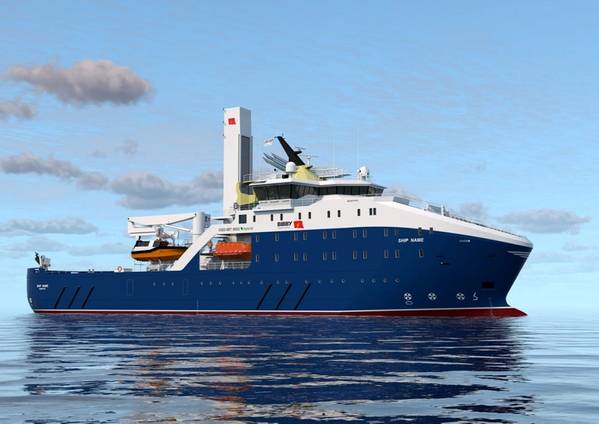
Bibby Marine announced it has tapped Longitude Engineering to design its first-of-kind zero-emission electric service operation vessel (SOV).
The "eSOV" project, as the project partners are calling it, was first announced in September 2023 and recently awarded £20 million under the U.K.'s Zero Emission Vessel and Infrastructure (ZEVI) competition as stakeholders across the marine and offshore industries strive for cleaner vessel operations.
Nigel Quinn, Bibby Marine CEO, said, “This project is the natural progression of our decarbonization journey, as we aim to operate a low or no carbon emission vessel by 2026.
“Designed in the U.K., the vessel will be a game-changer for our industry, and we are delighted to work alongside some of the market leading contractors and suppliers on this project, such as Longitude. Longitude’s expertise in specialised vessel design is vital to us realising our net zero goals and getting our eSOV in the water.”
Having developed the initial design, London-based Longitude Engineering is now developing the design to approval in principle (AIP) level for verification of the energy storage system and methanol system philosophy. This phase also includes design development and support for shipyard pricing.
The eSOV is based on Longitude Engineering’s OSD-IMT9605 design. The vessel will be powered by a hybrid 20MWh battery system and dual-fuel methanol generators for back-up and offshore charging capability.
The vessel will provide ultra-low emission support to offshore construction, operations and maintenance activities in the offshore renewables sector in the U.K. and elsewhere in Europe.
Dean Goves, Maritime Design Director at Longitude Engineering, said, “Whilst development of our renewable energy infrastructure increases, decarbonizing the wider project value chain is also of critical importance to further move the dial on our race to net zero. Studies have been conducted to explore the carbon footprint of marine operations in offshore wind construction. This project is the next step – engineering a solution. It has the opportunity to set the tone for future enhanced decarbonization of vessels involved in offshore operations.”
The Bibby-led consortium includes the Port of Aberdeen, ORE Catapult, Kongsberg, DNV, Shell and Liverpool John Moores University.

 Subscribe