University of Houston researchers are developing an autonomous robot to identify potential pipeline leaks and structural failures during subsea inspections. The technology will aim to make the inspection process safer and more cost effective.
From 1964 through 2015, a total of 514 offshore pipeline–related oil spills were recorded, 20 of which incurred spill volumes of more than 1,000 barrels, according to the Bureau of Ocean Energy Management.
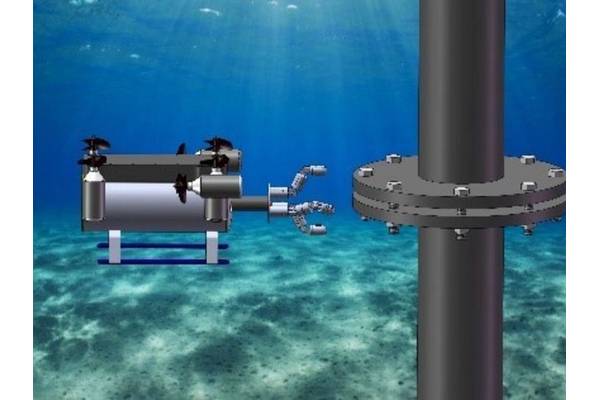
The SmartTouch technology now in development at UH consists of ROVs equipped with multiple stress wave-based smart touch sensors, video cameras and scanning sonars that can swim along a subsea pipeline to inspect flange bolts – bolted connections have accelerated the rate of pipeline accidents that result in leakage, according to the Bureau of Safety and Environmental Enforcement (BSEE).
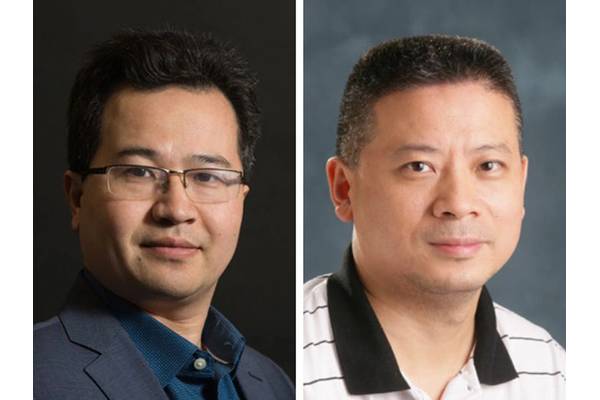
The BSEE is funding the project with a $960,493 grant to UH researchers Zheng Chen, Bill D. Cook Assistant Professor of Mechanical Engineering and Gangbing Song, John and Rebecca Moores Professor of Mechanical Engineering, who are working in collaboration with Oceaneering International and Chevron.
“By automating the inspection process with this state-of-the art robotic technology, we can dramatically reduce the cost and risk of these important subsea inspections which will lead to safer operations of offshore oil and gas pipelines as less intervention from human divers will be needed,” said Chen, noting that a prototype of the ROV has been tested in his lab and in Galveston Bay. The experiments demonstrated the feasibility of the proposed approach for inspecting the looseness of subsea bolted connections. Preliminary studies were funded by UH’s Subsea Systems Institute.
The UH researchers are collaborating with Oceaneering, and Chevron will evaluate the technology’s commercialization.

 Subscribe