An appeal by Greenpeace against Statoil’s plans to drill in the Barents Sea has been rejected, but the group is defending its right to occupy the location the rig is due to drill at.
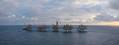
Activists scaled the Transocean Spitsbergen semisubmersible drilling rig on Tuesday, before being removed and arrested yesterday. The Greenpeace ship Esperanza then moved to where the Transocean Spitsbergen is due to drill an exploration well on the Apollo prospect. Greenpeace is contesting a temporary safety zone in the area, excluding vessels.
Statoil was waiting for a ruling on an appeal by Greenpeace concerned a discharge permit, before it started drilling operations. Today, according to Statoil, the appeal was rejected.
“Our top priority is to have safe operations without any harm to people or the environment. Delayed exploration activities come at a cost, however, which we estimate to be at a level of NOK7.5 million per day. In addition there are the costs to society,” says Irene Rummelhoff. Irene Rummelhoff, senior vice president for exploration on the Norwegian continental shelf, Statoil.
In a statement, Greenpeace said there was no reason why the Esperanza should have to make way for Statoil because of the declaration of a safety zone. Under the UN Convention on the Law of the Sea, foreign vessels enjoy freedom of navigation through the Exclusive Economic Zone, said Greenpeace International legal counsel Daniel Simons.
Statoil plans to drill three wells in the Hoop area this summer; on the Apollo, Atlantis and Mercury prospects. Drilling is scheduled for the period from late May to September.
Statoil says more than 100 exploration wells have been drilled in the Barents Sea over the last 34 years.
“This is an area Statoil knows well; its geology is familiar, it has low pressure and temperature, and the company participated in an exploration well 50 km further south (the Wisting well) just last year,” the firm said.
“Greenpeace has once again performed an illegal action. Statoil respects people’s right to make a legal protest, and we feel it is important to have a democratic debate around the oil industry. Our exploration drilling on Apollo is taking place in an area which has been impact assessed, opened up and awarded by Norwegian authorities. We have established robust plans for the operation, and feel confident they can be carried out safely and without accidents,” said Rummelhoff.
Read more: Activists mount two rigs
The Transocean Spitsbergen is owned by Transocean and on contract to Statoil.

 Subscribe